
Medial Meniscus Tear: Symptoms, Causes & Treatment Options
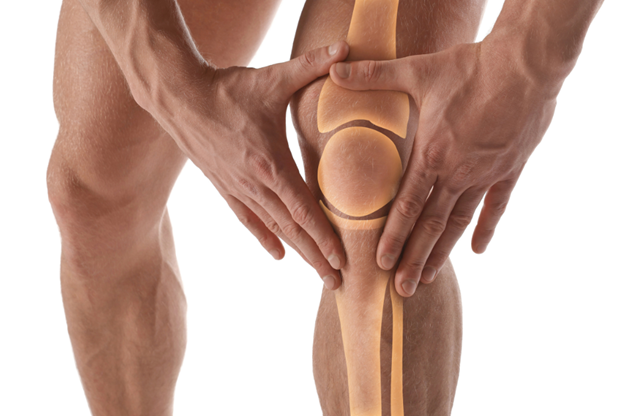
Some knee injuries announce themselves immediately. There is a twist during a pickup game, a sudden pop along the inside of the knee, and a sense that something inside the joint shifted out of place.
Others arrive quietly. Inner knee soreness after climbing stairs, discomfort when squatting to pick something up, or a knee that feels tight and unreliable after a long day.
A medial meniscus tear is a disruption of the crescent-shaped cartilage pad on the inner side of the knee joint. It is a common knee injury that can affect athletes and active adults as well as people with age-related degenerative changes. Treatment depends on the type of tear, symptoms, tissue quality, and overall condition of the knee.
Understanding what the meniscus does, why tear location matters so much, and which treatments apply to which patterns of damage can make the path forward far less confusing. The team at Southern California Orthopedic Surgeon evaluates each knee individually, because two patients with nearly identical symptoms may need very different care.
Recognizing Symptoms: How to Tell If You Have a Medial Meniscus Tear
Certain symptoms can raise suspicion for a medial meniscus tear, although an examination is often needed to distinguish it from other causes of knee pain.
One common finding is tenderness along the inner joint line. Pressing directly on the medial side of the knee often reproduces a sharp, localized pain that patients can point to with one finger.
Mechanical symptoms are the second major indicator. A torn fragment of cartilage can move within the joint, producing popping, catching, clicking, or true locking where the knee cannot fully straighten. That sensation of the joint getting stuck is one of the more specific findings in a meniscus injury.
Swelling usually appears on a delay. Swelling may develop gradually after a meniscus injury rather than appearing immediately. Stiffness and reduced range of motion can also occur as the knee becomes irritated.
Pain under load rounds out the picture. Deep squatting, pivoting on a planted foot, twisting to get out of a car, or kneeling tends to aggravate symptoms far more than walking on level ground.
These patterns can provide useful clues, but meniscus symptoms can overlap with arthritis, ligament injuries, and other knee conditions. A physical examination and, when appropriate, imaging help clarify the source. Arthritis pain is typically more diffuse and activity-related, while ligament injuries more often produce instability or a feeling of the knee giving way.
Also Read: Robotic-Assisted vs. Traditional Joint Replacement: What Actually Changes for Patients?
Causes & Risk Factors: Acute Trauma vs. Degenerative Wear
Meniscus tears are often broadly described as traumatic or degenerative, and that distinction can influence treatment decisions.
Acute traumatic tears occur when the knee is forced to rotate while the foot stays planted. This is common in soccer, basketball, tennis, and skiing, and it can also happen during a fall or direct collision. Traumatic tears are particularly common in younger, active patients and often follow a recognizable twisting injury.
Degenerative tears follow a slower path. As cartilage loses water content and elasticity with age, the meniscus becomes less resilient and can fray or split under ordinary loads. Many patients in their forties, fifties, and sixties describe no injury at all, only a gradual onset of inner knee pain after a routine movement like standing up from a low chair.
Several factors raise risk across both categories. Repetitive heavy kneeling and squatting, common in construction, flooring, and gardening work, place sustained pressure on the medial compartment. A prior ACL injury changes how the knee rotates and significantly increases the chance of a later meniscus tear. Alignment issues and muscle imbalances shift load toward the inner knee over time.
The takeaway for patients is that meniscus tears are not limited to competitive athletes. They are just as common in active adults who have never played organized sports.
Vascular Zones & Diagnosis: Why Tear Location Matters
The meniscus does not have a uniform blood supply, and that single anatomical fact drives most treatment decisions.
The outer third of the meniscus, known as the red-red zone, receives blood supply from a network of small vessels that branch in from the joint capsule. Tears in this region rarely heal on their own regardless of rest or therapy, which is why treatment often shifts toward addressing the unstable fragment directly.
The middle third, called the red-white zone, occupies a transitional area where vascularity begins to fade. Healing capacity here is partial and depends heavily on tear pattern, patient age, and overall joint health.
The inner portion, often called the white-white zone, has little to no direct blood supply, which limits its biological healing potential. However, limited healing potential does not automatically mean surgery is necessary. Symptoms, tear pattern, stability, activity level, associated arthritis, and the patient’s response to nonsurgical care all influence treatment.
Diagnosis combines physical examination with imaging. Provocative maneuvers such as McMurray’s test and joint line palpation help localize the problem and assess how the fragment behaves during rotation. When imaging is needed, MRI can help identify the tear’s location and pattern while also evaluating cartilage, ligaments, and other structures within the knee.
That combination matters because MRI findings alone do not tell the full story. Many people over fifty have meniscus changes on imaging without any symptoms, so the clinical exam is what connects the image to the pain.
Also Read: Partial Knee Replacement for Athletes: Is It a Viable Option?
Comprehensive Treatment Options: Non-Surgical Protocols to Arthroscopic Surgery
Treatment at Southern California Orthopedics is matched to the tear itself rather than to a single default approach.
Non-surgical management is often the starting point for degenerative tears and stable tears in the vascular periphery. A structured physical therapy program builds quadriceps and hip strength to offload the medial compartment and restore normal movement patterns. Depending on the patient’s symptoms and whether arthritis or inflammation is also present, injections may sometimes be considered for symptom relief. These treatments do not repair the torn meniscus itself.
For tears with good healing potential, meniscus repair may be recommended when surgery is appropriate. Repair preserves the native meniscus by securing the torn tissue so it can heal, although candidacy depends on more than blood supply alone. Tear pattern, tissue quality, location, patient age, activity goals, and associated injuries all influence the decision. Through small incisions, the torn margins are sutured back together so the native meniscus is preserved. Preservation matters because an intact meniscus continues to absorb shock and protect the joint surface for decades.
Partial meniscectomy may be considered when surgery is necessary, but the damaged tissue is not suitable for repair, including certain unstable or irreparable tear patterns. The surgeon removes only the damaged portion while preserving as much functional meniscal tissue as possible. Preserving as much healthy meniscal tissue as possible is an important goal because loss of functional meniscus increases stress on the joint cartilage.
The right choice depends on tear pattern, vascularity, age, activity goals, and the condition of the surrounding cartilage. Patients who want a deeper look at the procedure itself can review what to expect from meniscus tears and knee arthroscopy.
Protecting the Knee You Still Have
Persistent inner knee pain and mechanical symptoms are worth taking seriously, even when they feel manageable day to day.
Persistent pain, recurrent swelling, locking, or loss of motion deserves evaluation, particularly when symptoms interfere with normal activity. The goal is not to assume surgery is necessary, but to determine whether the symptoms are actually coming from the meniscus, what type of tear is present, and whether nonsurgical care or a procedure is the more appropriate next step.
Most patients also find that clarity reduces anxiety. Knowing where the tear sits, whether it can heal, and what recovery realistically looks like makes the decision far easier than guessing.
If inner knee pain, catching, or swelling has started limiting your activity, schedule an orthopedic knee evaluation at Southern California Orthopedic Surgeon and get a clear answer about what your knee actually needs.
Also Read: Meniscus Tears and Knee Arthroscopy: What Every Patient Should Know
Frequently Asked Questions
Can a medial meniscus tear heal on its own without surgery?
Some medial meniscus tears can improve without surgery. Tears with good blood supply may have greater biological healing potential, but tear pattern, stability, symptoms, age, activity level, and overall knee health also matter. Even tears with limited ability to heal structurally may become manageable with physical therapy, activity modification, and other nonsurgical care.
What is the difference between a medial meniscus tear and a lateral meniscus tear?
The medial meniscus sits on the inner side of the knee and is more firmly attached to surrounding structures, which makes it less mobile and more frequently injured. The lateral meniscus sits on the outer side and moves more freely. Symptoms follow the same side as the affected meniscus, so pain location is often the first clue.
How long does recovery take after medial meniscus surgery or physical therapy?
Recovery after a partial meniscectomy is typically faster, with many patients returning to daily activity within four to six weeks. A meniscus repair requires the tissue to heal biologically, so recovery is more protected and often takes three to six months. Non-surgical rehabilitation programs generally run six to twelve weeks depending on symptom severity.
Is it safe to walk on a torn medial meniscus?
Some people can continue walking comfortably with a meniscus tear, while others need to limit weight-bearing or certain activities depending on the injury. Pain, swelling, locking, instability, or inability to fully straighten the knee are reasons to seek an orthopedic evaluation rather than pushing through symptoms.
When should I see an orthopedic specialist at Southern California Orthopedic Surgeon for inner knee pain?
Consider an orthopedic evaluation when inner knee pain persists despite rest and activity modification, swelling keeps returning, or the knee catches or locks. Earlier evaluation may be appropriate after a significant injury, when you cannot fully straighten the knee, or when symptoms substantially limit walking, work, or exercise.