
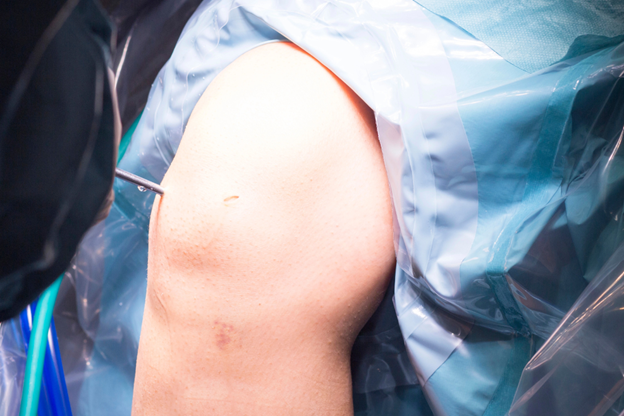
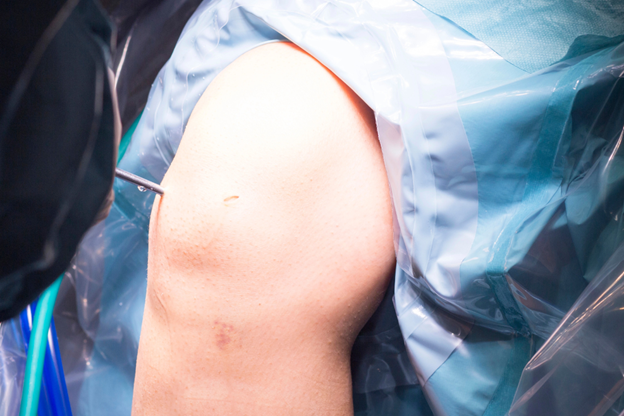
The knee is an incredibly hardworking joint, responsible for carrying the body’s weight and enabling motion. Involved in this joint’s function are two C-shaped pieces of cartilage called the menisci.
A tear in the meniscus is among the most frequent knee injuries, impacting everyone from highly trained athletes to people dealing with the normal wear and tear of aging. When symptoms like persistent pain, catching, or locking occur, knee arthroscopy, a procedure known for its small incisions and quick recovery, is the standard surgical method used to address the damage.
We’ll cover what the meniscus is, how tears happen, what to expect from symptoms and diagnosis, the various ways tears are treated, the details of arthroscopic surgery, and the path to a full recovery.
Understanding the Meniscus
Anatomy and Function
Each knee has a medial and a lateral meniscus, positioned between the femur and the tibia. These structures act as cushions, helping to absorb the shock of impact as we walk, run, and jump.
Beyond cushioning, they are key players in joint stability, aiding in the smooth gliding motion of the knee and distributing force evenly across the joint surface. Without them, the ends of the bones would rub directly against each other, leading to accelerated deterioration.
How Meniscus Tears Happen
- Traumatic Tears: These happen instantly and are common in sports. They are typically caused by a sudden, forceful twist of the knee while the foot is planted.
- Degenerative Tears: These tears are more common in older adults and are a result of age-related deterioration of the cartilage over time. Even simple actions like squatting, stepping down awkwardly, or rising from a chair can cause a tear in weakened, aged tissue. These tears may develop without a specific event.
Symptoms and When to Seek Medical Care
Common Symptoms
- Pain along the joint line of the knee, the spot where the thigh bone meets the shin bone.
- A popping or clicking sensation, often at the moment the injury occurs.
- Swelling that may not appear immediately but often develops gradually over the following hours.
- Mechanical symptoms such as catching, locking, or the knee giving way. Locking is when the knee is temporarily stuck in one position.
- Stiffness or a reduced ability to fully bend or straighten the knee.
When Symptoms Signal a More Serious Tear
While some mild tears may settle down with rest, certain signs suggest the tear is more severe and requires prompt medical attention. Immediate evaluation is needed if you experience:
- The inability to straighten the knee fully.
- Severe locking or consistent instability.
- Pain that is severe and makes bearing weight difficult.
- Any set of symptoms that lasts longer than one to two weeks without improvement.
How Meniscus Tears Are Diagnosed
Physical Examination
The doctor will gently feel the joint, looking for tenderness along the joint line. They may also perform specific tests, such as the McMurray test or the Thessaly test, which involve bending and rotating the knee to reproduce the catching or pain sensation characteristic of a tear. Ligament stability will also be checked to make sure other structures are not also damaged.
Imaging
- X-rays are not used to view the cartilage itself, but they are helpful to rule out other causes of knee pain, like fractures or signs of early arthritis.
- A Magnetic Resonance Imaging (MRI) scan provides a detailed picture of the soft tissues in the knee. The MRI is the most helpful test for diagnosing a tear, showing its exact location, size, and pattern, which helps guide the treatment choice.
Treatment Choices Before Surgery
Conservative Management
- R.I.C.E.: Rest, Ice, Compression, and Elevation.
- Over-the-counter NSAIDs (non-steroidal anti-inflammatory drugs) to help manage discomfort.
- Modifying activities to avoid movements that cause pain.
- Physical therapy to rebuild strength in the muscles surrounding the knee (quadriceps and hamstrings) and improve overall mobility.
Individuals with small, stable tears, degenerative tears without major symptoms, or those who do not experience mechanical locking or catching are the most likely to benefit from this care.
When Knee Arthroscopy Is Recommended
Indications for Surgery
The operation is typically suggested for patients who have:
- Persistent pain that has not improved with weeks of conservative care.
- Mechanical locking or catching, a sign that a piece of the meniscus is blocking normal joint movement.
- Displaced or large tears, such as a “bucket-handle” tear, where the torn piece is substantial and needs immediate attention.
- Tears in younger or highly active individuals who are good candidates for repair.
Why Arthroscopy Is the Preferred Technique
Knee arthroscopy is the standard procedure because it is minimally invasive. The operation is performed through tiny incisions, meaning less trauma to the surrounding tissues, shorter recovery times, and a faster return to daily activities compared to open surgery.
Also Read: How Early Intervention with Partial Knee Replacement Preserves Joint Health
What Happens During Knee Arthroscopy
The Procedure Step by Step
Two Main Surgical Approaches
- Meniscus Repair: The surgeon sutures the torn edges back together, aiming for complete healing. This is usually reserved for younger individuals and tears that occur in the outer one-third of the meniscus, an area that has a good blood supply necessary for healing.
- Meniscectomy: If the tear is in an area with poor blood supply or is too shredded to repair, the damaged, unstable tissue is carefully trimmed away. The goal is always to preserve as much healthy meniscus as possible to protect the knee joint.
The tear’s location and pattern, the patient’s age and activity level, and the overall health of the knee are all factors that determine whether a repair or a removal is performed.
Recovery After Knee Arthroscopy
Immediate Post-Op Expectations
Physical Therapy
Typical Recovery Timeline
- Daily activities can often be resumed within a few days to a week.
- Return to light exercise is generally within two to six weeks.
- Full athletic return following a meniscectomy is often within two to three months, while a meniscus repair may require four to six months or more to allow the tissue time to heal completely.
Long-Term Outcomes
Success Rates
Preventing Future Injuries
Risks and Considerations
Even after a successful procedure, there is a risk of a re-tear. Furthermore, knees that had tears, particularly those with long-standing damage before surgery, may be slightly more susceptible to developing arthritic changes down the line.
Conclusion
The meniscus plays an important role in the health and longevity of your knee. When an injury occurs, early evaluation with an orthopedic specialist matters, as the severity of the tear will dictate the best approach.
Knee arthroscopy is a highly successful, minimally invasive procedure that can provide lasting relief from painful mechanical symptoms. By getting a careful diagnosis and following the recommended treatment and rehabilitation plan, patients can achieve strong long-term results and return to the activities they enjoy.
A meniscus tear should never be ignored. Contact our orthopedic team to book a comprehensive assessment and learn whether knee arthroscopy or another treatment is right for you. Early diagnosis can protect your long-term knee health.