
Why Some Patients Qualify for Partial Knee Replacement, and Others Don’t
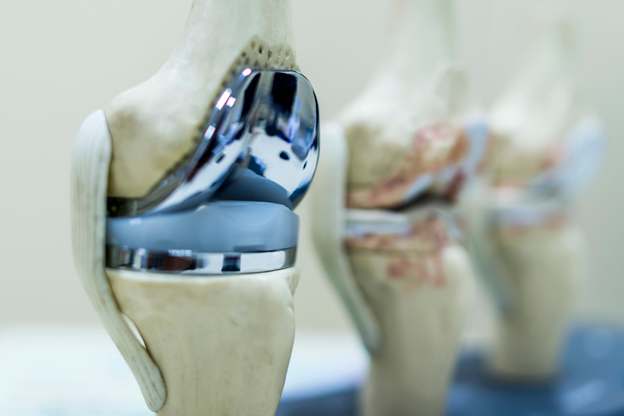
Not every arthritic knee behaves the same way. Some patients develop damage isolated to one specific area of the knee, while others experience widespread degeneration affecting the entire joint. This distinction often determines whether a patient qualifies for partial knee replacement in Torrance or whether a total knee replacement is the more appropriate option.
Many people assume the decision depends mainly on how severe their pain feels. In reality, orthopedic surgeons focus much more on the structural condition of the knee itself. Joint stability, cartilage loss, alignment, ligament function, and imaging findings all play important roles in determining the appropriate treatment approach.
At Southern California Orthopedic Surgeon: Hip and Knee Specialist, Dr. Andrawis evaluates each knee individually because the best surgical recommendation depends on how and where the joint has been damaged, not simply on the intensity of symptoms.
What Is a Partial Knee Replacement?
A partial knee replacement replaces only the damaged portion of the knee joint rather than resurfacing the entire knee. The knee itself contains three major compartments:
- The medial compartment, located on the inside portion of the knee
- The lateral compartment, located on the outside portion
- The patellofemoral compartment, involving the kneecap and the front of the knee
When arthritis is limited to a single compartment, partial knee replacement may be an option. Healthy cartilage, bone, and ligaments in the unaffected areas are preserved rather than replaced.
This differs from total knee replacement, where all compartments of the knee joint are resurfaced because degeneration has become more widespread. Understanding the difference between partial and total knee replacement is important because the procedures are designed for different patterns of joint damage.
Also Read: Chronic Knee Pain and Limited Mobility: What Comes Next?
Why Some Knees Are Better Candidates Than Others
One of the biggest reasons patients become confused about knee surgery recommendations is that two people can experience very similar symptoms while having very different structural damage inside the knee.
Partial knee replacement eligibility, explained in simple terms, comes down to whether the damage remains localized enough for a smaller reconstruction to function reliably long term. Surgeons evaluating who is a candidate for partial knee replacement look closely at several factors:
- Whether arthritis remains isolated to one compartment
- Whether ligaments remain stable
- If alignment problems are mild or severe
- Whether the surrounding cartilage remains healthy
- Whether bone quality supports long-term implant stability
Some patients with moderate pain may still qualify, while others with similar symptoms may not because arthritis has already spread throughout multiple areas of the joint.
The Importance of Compartment-Specific Arthritis
Arthritis rarely develops evenly throughout the knee. In many patients, degeneration begins in the medial compartment, the inner portion of the knee, and the area most commonly affected by wear-related arthritis.
For some individuals, the damage remains relatively isolated for years. In those situations, partial knee replacement may help preserve the unaffected structures of the knee while directly addressing the damaged compartment.
However, other patients develop diffuse arthritis affecting multiple compartments at once. Once cartilage loss spreads extensively into the lateral compartment or the patellofemoral joint, partial replacement may no longer provide durable results.
This is one of the primary reasons patients may not qualify for partial knee replacement. Even if one area appears more painful than another, widespread degeneration often alters the joint’s overall mechanics in ways that necessitate a more comprehensive reconstruction.
Why Ligament Stability Matters
Ligament function plays a major role in determining whether partial knee replacement is appropriate. Unlike total joint replacement, partial replacement depends heavily on the knee’s natural stabilizing structures remaining intact.
The ACL, surrounding ligaments, and soft tissue structures help maintain normal movement patterns, balance, and alignment throughout daily activities. If these stabilizers become damaged or insufficient, the knee may no longer move predictably enough for a partial implant to function properly over time.
Instability can increase implant stress and potentially accelerate wear. For this reason, some patients with advanced ligament damage may be better candidates for total knee replacement rather than isolated compartment reconstruction.
Alignment Problems Can Change Surgical Recommendations
Knee alignment affects how pressure moves across the joint during walking and standing. In some patients, arthritis causes the knee to bow inward or shift abnormally over time.
Mild alignment problems can sometimes still allow for partial knee replacement. However, more advanced deformities may place uneven pressure across the implant and remaining cartilage, reducing the likelihood of long-term success.
This is one reason why imaging and detailed orthopedic evaluation matter so much. Severe structural shifting may indicate that the entire knee joint has already been affected mechanically, even if symptoms seem concentrated in one area.
Why Age Alone Does Not Determine Eligibility
Many patients assume younger people automatically qualify for partial knee replacement while older individuals require total knee replacement. In reality, age alone rarely determines candidacy.
Orthopedic surgeons focus more heavily on:
- Joint condition
- Activity level
- Bone quality
- Ligament integrity
- Arthritis distribution
- Alignment patterns
A younger patient with widespread degeneration may still require total joint replacement, while an older patient with isolated compartment arthritis and strong ligament support may remain an excellent candidate for partial replacement.
How doctors decide on partial knee replacement depends far more on anatomy and imaging findings than chronological age.
Also Read: Can Knee Replacement Relieve Chronic Arthritis Pain for Good?
Symptoms Alone Do Not Tell the Full Story
Pain severity does not always reflect the extent of structural damage in the knee. Two patients may report similar swelling, stiffness, or mobility limitations while having completely different patterns of arthritis on imaging studies.
Some patients with severe cartilage loss surprisingly report moderate discomfort, while others with less extensive degeneration experience significant pain. Because of this, physical examination and imaging typically guide surgical planning more than symptoms alone.
This often explains why some people initially expect one type of knee pain surgery but later receive a different recommendation after evaluation.
Imaging Plays a Major Role in Surgical Planning
Imaging is one of the most important parts of determining knee replacement candidacy. An orthopedic surgeon relies heavily on diagnostic studies to understand the true condition of the joint beneath the symptoms.
Weight-bearing X-rays are particularly important because they show how the knee functions under pressure while standing. These images help identify:
- Bone-on-bone cartilage wear
- Compartment-specific arthritis
- Alignment changes
- Joint space narrowing
- Structural deformity
MRI imaging may also be used in select cases to evaluate cartilage condition, ligament integrity, and surrounding soft tissues more closely.
During evaluation, surgeons assess where cartilage loss occurs, whether damage extends beyond a single compartment, and how much healthy joint structure remains. This anatomy-focused approach helps determine when partial knee replacement is recommended and when a total knee replacement may offer more reliable long-term function.
Partial vs. Total Knee Replacement: Why the Decision Is So Individualized
Patients researching knee replacement often search for straightforward answers about which surgery is “better.” In reality, the decision is highly individualized.
Partial knee replacement preserves more natural bone, ligaments, and joint movement patterns. For appropriately selected patients, this can allow the knee to feel more natural after recovery.
However, preserving tissue only works well when the remaining structures are healthy enough to support long-term joint mechanics. If arthritis extends beyond a single compartment or instability is present, total joint replacement may provide greater durability and function over time.
The goal is not to perform the smallest surgery possible. The goal is to select the procedure most appropriate to the knee’s actual condition.
Why Some Patients Initially Thought to Be Candidates Ultimately Aren’t
Some patients are initially told they may qualify for partial knee replacement, only to learn later that they are not ideal candidates. This can happen because imaging or surgical evaluation reveals more advanced degeneration than originally expected.
In certain cases, arthritis that appears isolated on initial examination may later involve additional compartments. Other patients develop previously unrecognized ligament instability or alignment problems that make isolated replacement less reliable.
These situations help explain why patients may not qualify for partial knee replacement, even after early discussions suggested it might be possible.
The Goal Is Long-Term Function, Not the Smallest Surgery Possible
Patients understandably want the least invasive treatment available. However, smaller surgery does not automatically mean better long-term outcomes.
The best knee arthritis treatment is the one most likely to restore mobility, reduce pain, and remain durable for many years. In some situations, partial knee replacement achieves those goals extremely well. In others, total joint replacement may offer greater long-term stability and reliability.
This is why orthopedic decision-making focuses heavily on structural evaluation rather than assumptions about which procedure sounds simpler.
When Patients Should Consider an Orthopedic Evaluation
Patients experiencing worsening knee pain, instability, stiffness, swelling, or declining mobility should consider evaluation by an orthopedic surgeon. This becomes especially important when conservative treatments no longer provide meaningful relief.
Persistent symptoms may indicate progressive arthritis or changes in joint mechanics that require closer assessment. Early evaluation can help patients better understand both surgical and non-surgical options before limitations become more severe.
Also Read: Avoiding Revision Surgery: How to Protect Your New Knee Joint
Learn Which Knee Replacement Option Fits Your Joint Condition
Not every patient requires total knee replacement, and not every patient qualifies for partial knee replacement in Torrance. Determining the right approach depends on careful orthopedic evaluation, imaging, and understanding how arthritis affects the individual knee joint.
At Southern California Orthopedic Surgeon, Dr. Andrawis focuses on individualized treatment planning based on anatomy, joint stability, imaging findings, and long-term function goals. Patients considering knee surgery or exploring options for knee arthritis treatment can benefit from reviewing imaging and discussing which approach best fits their condition.